Difference between revisions of "Funny animal"
m |
(wacky) |
||
| (18 intermediate revisions by 12 users not shown) | |||
| Line 1: | Line 1: | ||
| − | '''Funny animal''' is a | + | [[File:Oswaldthe Rabbit.jpeg|right|thumb|Oswald the Rabbit, a 1927 funny animal ([[Walt Disney]])]] |
| + | [[File:Angry Beavers.png|right|thumb|Angry Beavers, 1997 funny animals ([[Nickelodeon]])]] | ||
| + | [[File:SabrinaCurrent.png|right|thumb|Sabrina Skunk, a furry character]] | ||
| + | '''Funny animal''' is a term in traditional or digital [[comics]] and [[Cartoon|animated cartoon]]s in which the main [[character]]s are [[animal]]s who emulate/recreate almost all aspects of [[W:Human society|Human society]]: culture, work, [[W:Consumerism|consumerism]], humanoid garments, and relationships, among others. | ||
| − | + | == Appearance == | |
| − | + | A funny animal is typically an [[anthropomorphic]] [[bipedal]] being with such characteristics as [[Talking animal|speaking in human language]]s or displaying facial expressions. Others may display a more [[feral]] look closer to their real-life counterpart, but still displaying some [[humanoid]] mannerisms (human grasping via [[hand]]s with thumbs or [[W:Prehensility|prehensility]]), or be completely animal looking, but with all possessing [[W:Sapient|human sapience]]. | |
| − | == | + | == Use in mainstream media == |
| − | + | While most funny animal stories are light-hearted and humorous, the genre is not exclusively [[W:comedic|comedic]]. Dark or serious stories featuring anthropomorphic animals are also sometimes grouped under the "funny and wacky animals" category (e.g. ''[[Blacksad]]''). These stories may intersect with any other genre or group of genres, including historical stories, [[science fiction]], Westerns, slapstick comedy, children's entertainment, and satire. | |
| − | + | ==Funny animal and furry == | |
| − | + | The use of the word [[furry]] as a description of an anthropomorphic animal character in the [[furry fandom]] in began in the 1980s,{{cn}} and was becoming common on the Internet by the 1990s when the newsgroup [[alt.fan.furry]] was created for fans of funny animals.{{clarify}}{{cn}} | |
| − | {{ | + | Some [[cartoonist]]s and other artists prefer the original term, either because they feel a strong connection to the earlier artists, but mostly because they disliked being associated with [[furry]].{{clarify}}{{cn}} |
| + | |||
| + | == See also == | ||
| + | * [[W:Funny animal|Funny animal]] on [[Wikipedia]] | ||
| + | * [[Funny animal fandom]] | ||
| + | * [[Funny animal artist]] | ||
| + | |||
| + | == External links == | ||
| + | * [https://www.deviantart.com/tag/Funny_animal Funny animal] search results in [[DeviantArt]] | ||
| + | * [https://www.furaffinity.net/search/?q=Funny_animal Funny animal] search results in [[Fur Affinity]] | ||
[[Category:Terms]] | [[Category:Terms]] | ||
| + | {{wikipedia|Funny_animal}} | ||
| + | [[es:Funny animal]] | ||
| + | [[it:Funny animal]] | ||
| + | [[ru:Забавные животные]] | ||
Latest revision as of 19:47, 18 June 2024
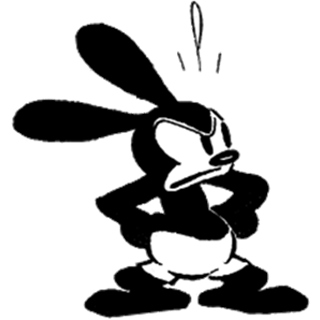

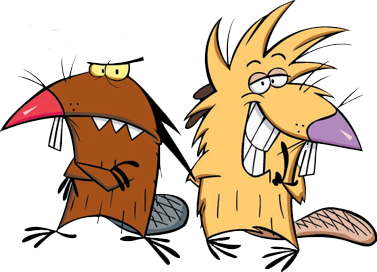

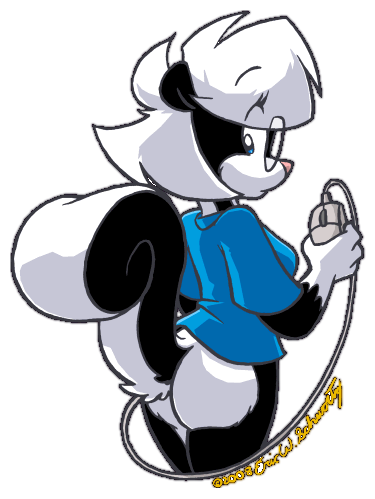

Funny animal is a term in traditional or digital comics and animated cartoons in which the main characters are animals who emulate/recreate almost all aspects of Human society: culture, work, consumerism, humanoid garments, and relationships, among others.
Contents
Appearance[edit]
A funny animal is typically an anthropomorphic bipedal being with such characteristics as speaking in human languages or displaying facial expressions. Others may display a more feral look closer to their real-life counterpart, but still displaying some humanoid mannerisms (human grasping via hands with thumbs or prehensility), or be completely animal looking, but with all possessing human sapience.
Use in mainstream media[edit]
While most funny animal stories are light-hearted and humorous, the genre is not exclusively comedic. Dark or serious stories featuring anthropomorphic animals are also sometimes grouped under the "funny and wacky animals" category (e.g. Blacksad). These stories may intersect with any other genre or group of genres, including historical stories, science fiction, Westerns, slapstick comedy, children's entertainment, and satire.
Funny animal and furry[edit]
The use of the word furry as a description of an anthropomorphic animal character in the furry fandom in began in the 1980s,[citation needed] and was becoming common on the Internet by the 1990s when the newsgroup alt.fan.furry was created for fans of funny animals.[clarify][citation needed]
Some cartoonists and other artists prefer the original term, either because they feel a strong connection to the earlier artists, but mostly because they disliked being associated with furry.[clarify][citation needed]
See also[edit]
External links[edit]
- Funny animal search results in DeviantArt
- Funny animal search results in Fur Affinity

|
Some of this page is derived from Wikipedia. The original article was at Funny_animal. The list of authors can be seen in the page history. As with WikiFur, the text of Wikipedia is available under CC-BY-SA and the GFDL. |